Health and Safety Policy for Tree Surgeons Plumstead
 This health and safety policy sets out the standards expected from our tree surgery team and all associated workers. It applies to every stage of arboricultural work, from site preparation and climbing to ground operations, waste handling, and post-work inspection. Our approach is built on prevention, planning, supervision, and clear communication, so that tree surgery tasks are completed safely and efficiently.
Tree surgery involves working at height, handling heavy timber, using sharp cutting tools, and operating machinery in changing outdoor conditions. Because of these hazards, tree surgeons Plumstead must assess each job carefully before work begins. Risk reduction is not treated as a separate task; it is part of the job itself. Every worker is expected to act responsibly, report concerns early, and support a culture where safety comes before speed.
 We recognise that no two sites are the same. A small garden tree, a roadside pruning task, or a large sectional dismantle may each require a different level of control. For that reason, our tree surgeon Plumstead safety standards require site-specific planning, suitable equipment selection, and the right level of competence for every person involved.
Before any work starts, a competent person must identify hazards and record the main control measures. This includes checking for unstable trees, overhead lines, public access, hidden defects, decayed limbs, wildlife constraints, slippery surfaces, and nearby structures. Where needed, the area must be secured using barriers, signage, or controlled access points. The aim is to reduce avoidable risk to workers, clients, visitors, and members of the public.
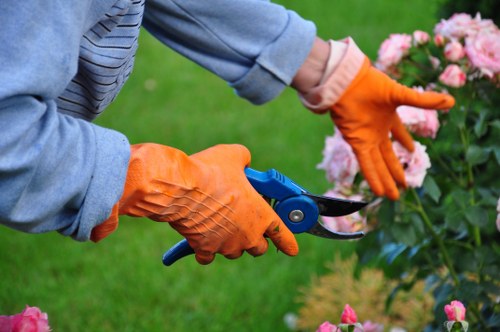
All operatives must wear appropriate personal protective equipment, including helmet, eye protection, hearing protection, chainsaw trousers, gloves, and safety footwear where required by the task. Equipment must be inspected before use, maintained in good condition, and removed from service if defective. Cutting tools, climbing gear, rigging systems, and lowering devices must be used only by trained personnel who understand their limitations.
 Our tree surgery health and safety arrangements also place a strong emphasis on competence. Training must match the work being carried out, and anyone using specialist equipment must be authorised and supervised appropriately. Tree surgeons in Plumstead are expected to stay alert to changing conditions, including wind, rain, poor visibility, fatigue, and ground instability, which can increase the likelihood of accidents.
Safe working at height is essential in arboriculture. Climbers must use approved climbing systems, maintain three points of contact where practical, and carry out regular checks on anchor points, ropes, and attachment devices. Where a task can be completed from the ground without unnecessary risk, that option should be preferred. Rescue planning must always be in place before climbing begins, and the team must know how to respond quickly if a fall or suspension incident occurs.
Chainsaw use requires particular care. Only trained and authorised staff may operate saws, and each user must follow correct starting, cutting, refuelling, and storage procedures. The saw must be matched to the job, kept sharp, and handled with full attention. A tree surgeon must never use a cutting tool while distracted, fatigued, or under the influence of anything that impairs judgement. Safe spacing between workers is also vital to prevent contact injuries.
Rigging, felling, and stump operations must be planned to control the movement of timber and reduce impact risks. Loads should be assessed before cutting, with clear communication between climbers and ground teams. When handling branches, trunks, or brash, workers should use correct lifting methods and mechanical assistance where possible. Good housekeeping is also part of the policy: keeping work areas tidy reduces slips, trips, and confusion during complex operations.
 Emergency preparedness is a key part of our policy. First aid equipment must be available on site, and a nominated first aider should be identified where practical. All workers must know how to summon emergency help and provide accurate location details when required. In the event of injury, unsafe conditions, equipment failure, or unexpected site changes, work must stop until it is safe to continue.
Environmental and public protection are included within our safety duties. Tree work should be carried out with care to avoid unnecessary disturbance, damage to property, and contamination from fuel, oils, or waste materials. Branches, arisings, and timber must be managed so they do not create hazards for pedestrians, road users, or neighbouring premises. This is especially important where work interfaces with shared access routes or busy outdoor spaces.
 Supervision and review help keep standards consistent. Work practices should be monitored regularly, incidents and near misses must be recorded, and lessons should be used to improve future planning. Our health and safety policy will be reviewed whenever work methods change, new risks are identified, or regulations and industry expectations are updated. By maintaining high standards, tree surgeons Plumstead can carry out their work safely, professionally, and responsibly.